
Universal Pipette Tips
Disposable pipette tips designed to fit single and multichannel pipettes from most manufacturers; offer acceptable performance compared to pipette specific tips and can be used with a variety of pipette models.
Single-use universal pipette tips are designed for compatibility with most mechanical and electronic single and multichannel pipettors.
Universal pipette tips are available in a range of types, sizes, colors, styles, and packaging configurations and may be designed for specific purposes or tasks.
- Capacity or volume based on the pipettor size
- Filters to reduce contamination and cross-contamination
- Color
- Sterility or autoclavability
- Tip style: beveled, tapered, wide bore, round, flat, or gel-loading
- Length: short or extended
- Purity: metal-free or DNase-, RNase-, ATP-, Bioburden-, PCR inhibitor-, endotoxin-, or pyrogen-free for genomic and biologic applications
- Surface treatments to reduce retention
- Packaging options to help facilitate re-stocking or eliminate waste

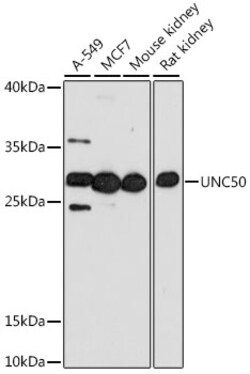
ABclonal Technology UNC50 Rabbit pAb

Predicted to enable RNA binding activity. Predicted to be involved in protein localization to cell surface. Predicted to be located in Golgi apparatus and nuclear inner membrane. Predicted to be integral component of Golgi membrane.

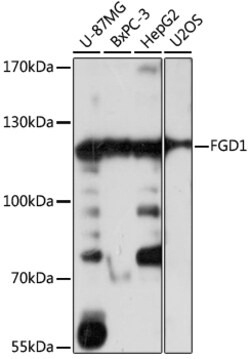
ABclonal Technology FGD1 Rabbit pAb
This gene encodes a protein that contains Dbl (DH) and pleckstrin (PH) homology domains and is similar to the Rho family of small GTP-binding proteins. The encoded protein specifically binds to the Rho family GTPase Cdc42Hs and can stimulate the GDP-GTP exchange of the isoprenylated form of Cdc42Hs. It also stimulates the mitogen activated protein kinase cascade leading to c-Jun kinase SAPK/JNK1 activation. Defects in this gene are the cause of the faciogenital dysplasia in Aarskog-Scott syndrome and a syndromatic form of X-linked cognitive disability.
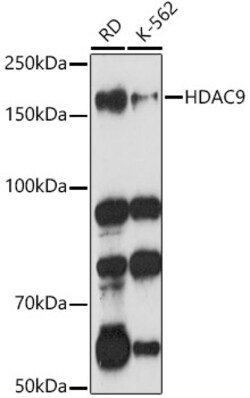
ABclonal Technology HDAC9 Rabbit pAb
Histones play a critical role in transcriptional regulation, cell cycle progression, and developmental events. Histone acetylation/deacetylation alters chromosome structure and affects transcription factor access to DNA. The protein encoded by this gene has sequence homology to members of the histone deacetylase family. This gene is orthologous to the Xenopus and mouse MITR genes. The MITR protein lacks the histone deacetylase catalytic domain. It represses MEF2 activity through recruitment of multicomponent corepressor complexes that include CtBP and HDACs. This encoded protein may play a role in hematopoiesis. Multiple alternatively spliced transcripts have been described for this gene but the full-length nature of some of them has not been determined.
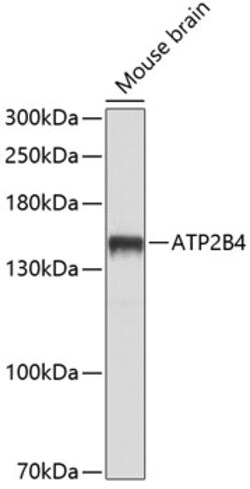
ABclonal Technology ATP2B4 Rabbit pAb
The protein encoded by this gene belongs to the family of P-type primary ion transport ATPases characterized by the formation of an aspartyl phosphate intermediate during the reaction cycle. These enzymes remove bivalent calcium ions from eukaryotic cells against very large concentration gradients and play a critical role in intracellular calcium homeostasis. The mammalian plasma membrane calcium ATPase isoforms are encoded by at least four separate genes and the diversity of these enzymes is further increased by alternative splicing of transcripts. The expression of different isoforms and splice variants is regulated in a developmental, tissue- and cell type-specific manner, suggesting that these pumps are functionally adapted to the physiological needs of particular cells and tissues. This gene encodes the plasma membrane calcium ATPase isoform 4. Alternatively spliced transcript variants encoding different isoforms have been identified.
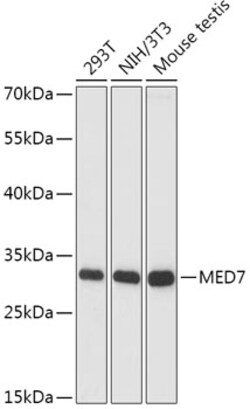
ABclonal Technology MED7 Rabbit pAb
The activation of gene transcription is a multistep process that is triggered by factors that recognize transcriptional enhancer sites in DNA. These factors work with co-activators to direct transcriptional initiation by the RNA polymerase II apparatus. The protein encoded by this gene is a subunit of the CRSP (cofactor required for SP1 activation) complex, which, along with TFIID, is required for efficient activation by SP1. This protein is also a component of other multisubunit complexes e.g. thyroid hormone receptor-(TR-) associated proteins which interact with TR and facilitate TR function on DNA templates in conjunction with initiation factors and cofactors. Two transcript variants encoding the same protein have been found for this gene.
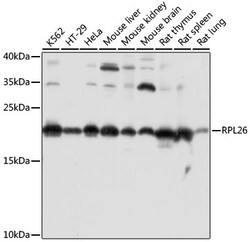
ABclonal Technology RPL26 Rabbit pAb
Ribosomes, the organelles that catalyze protein synthesis, consist of a small 40S subunit and a large 60S subunit. Together these subunits are composed of 4 RNA species and approximately 80 structurally distinct proteins. This gene encodes a ribosomal protein that is a component of the 60S subunit. The protein belongs to the L24P family of ribosomal proteins. It is located in the cytoplasm. As is typical for genes encoding ribosomal proteins, there are multiple processed pseudogenes of this gene dispersed through the genome. Mutations in this gene result in Diamond-Blackfan anemia. Alternative splicing results in multiple transcript variants.
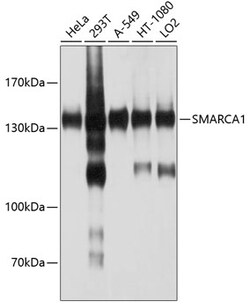
ABclonal Technology SMARCA1 Rabbit pAb
This gene encodes a member of the SWI/SNF family of proteins. The encoded protein is an ATPase which is expressed in diverse tissues and contributes to the chromatin remodeling complex that is involved in transcription. The protein may also play a role in DNA damage, growth inhibition and apoptosis of cancer cells. Alternative splicing results in multiple transcript variants.
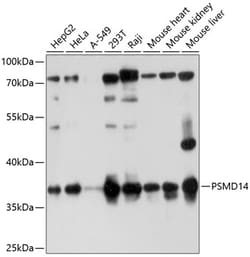
ABclonal Technology PSMD14 Rabbit pAb
This gene encodes a component of the 26S proteasome. The 26S proteasome is a large multiprotein complex that catalyzes the degradation of ubiquitinated intracellular proteins. The encoded protein is a component of the 19S regulatory cap complex of the 26S proteasome and mediates substrate deubiquitination. A pseudogene of this gene is also located on the long arm of chromosome 2.
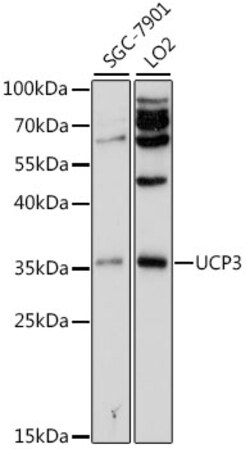
ABclonal Technology UCP3 Rabbit pAb
Mitochondrial uncoupling proteins (UCPs) are part of the mitochondrial anion carrier protein (MACP) family. They uncouple oxidative phosphorylation from ATP synthesis, dissipating energy as heat, known as the mitochondrial proton leak. UCPs transfer anions across the mitochondrial membrane and reduce the mitochondrial membrane potential. The expression of UCPs varies by tissue; this gene is primarily expressed in skeletal muscle. Its protein product is believed to protect mitochondria from lipid-induced oxidative stress. When fatty acid supply exceeds oxidation capacity, UCP facilitates the export of excess fatty acids from mitochondria. UCPs contain three solcar protein domains typical of MACPs. Two splice variants of this gene have been identified.
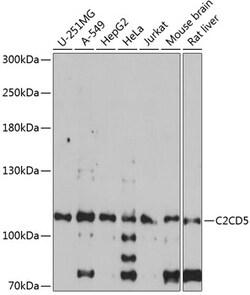
ABclonal Technology C2CD5 Rabbit pAb
Enables calcium ion binding activity and calcium-dependent phospholipid binding activity. Involved in cellular response to insulin stimulus, intracellular protein transmembrane transport, and positive regulation of transport. Located in several cellular components, including centriolar satellite, cytoplasmic vesicle membrane, and ruffle membrane.
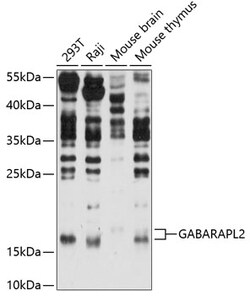
ABclonal Technology GABARAPL2 Rabbit pAb
Enables ubiquitin protein ligase binding activity. Involved in negative regulation of proteasomal protein catabolic process and protein localization to endoplasmic reticulum. Located in Golgi membrane and autophagosome membrane.
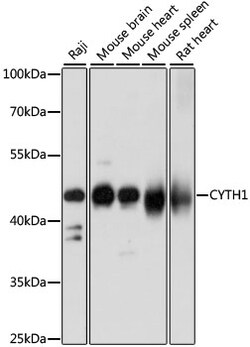
ABclonal Technology CYTH1 Rabbit pAb
The protein encoded by this gene is a member of the PSCD family. Members of this family have identical structural organization that consists of an N-terminal coiled-coil motif, a central Sec7 domain, and a C-terminal pleckstrin homology (PH) domain. The coiled-coil motif is involved in homodimerization, the Sec7 domain contains guanine-nucleotide exchange protein activity, and the PH domain interacts with phospholipids and is responsible for association of PSCDs with membranes. Members of this family appear to mediate the regulation of protein sorting and membrane trafficking. This gene is highly expressed in natural killer and peripheral T cells, and regulates the adhesiveness of integrins at the plasma membrane of lymphocytes. A pseudogene of this gene has been defined on the X chromosome. Alternative splicing results in multiple transcript variants.
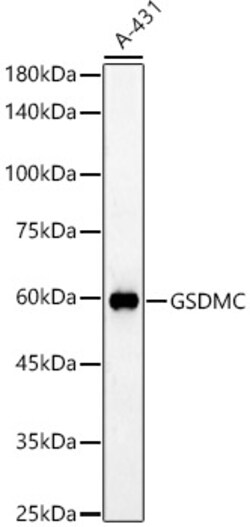
ABclonal Technology GSDMC Rabbit pAb
Predicted to enable phosphatidylinositol-4,5-bisphosphate binding activity, phosphatidylinositol-4-phosphate binding activity, and phosphatidylserine binding activity. Predicted to be involved in defense response to bacterium and pyroptosis. Predicted to act upstream of or within intestinal epithelial cell development. Located in cytoplasm.

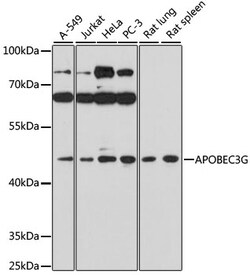
ABclonal Technology APOBEC3G Rabbit pAb
This gene is a member of the cytidine deaminase gene family. It is one of seven related genes or pseudogenes found in a cluster, thought to result from gene duplication, on chromosome 22. Members of the cluster encode proteins that are structurally and functionally related to the C to U RNA-editing cytidine deaminase APOBEC1. The protein encoded by this gene catalyzes site-specific deamination of both RNA and single-stranded DNA. The encoded protein has been found to be a specific inhibitor of human immunodeficiency virus-1 (HIV-1) infectivity.